

Raipur has many eye clinics and hospitals, and every family wants the "best" one. But the best eye hospital is not the one with the biggest advertisement — it is the one that can safely and completely treat your eye problem, explain everything clearly and stay with you after surgery. This guide gives you a simple checklist used by experienced patients and doctors.
1. Does the hospital have the right specialist for your problem?
Ophthalmology has sub-specialties. A general eye doctor can diagnose most problems, but complex cases need a dedicated specialist:
- Cataract & lens surgery — phaco surgeon with experience in difficult cataracts.
- Retina — diabetic retinopathy, retinal detachment, injections, vitrectomy.
- Cornea — infections, keratoconus, corneal transplant.
- Glaucoma — pressure control and long-term nerve monitoring.
- Paediatric & squint — children's vision, lazy eye, squint surgery.
- Oculoplasty — droopy eyelid (ptosis), watering eye (DCR), orbit.
At SGVEH these are covered by a team of 11 specialists — see the doctors page for each doctor's qualifications and focus.
2. Are key tests available under one roof?
Good decisions need good measurements. Ask whether the hospital itself has OCT (retina scan), optical biometry (lens power for cataract), corneal topography/Pentacam, visual field testing and B-scan ultrasound. When tests are done in-house, the doctor can compare results directly and you avoid running between centres.
3. Safety systems: NABH and infection control
NABH (National Accreditation Board for Hospitals & Healthcare Providers) accreditation means the hospital's sterilisation, operation-theatre protocols, medication safety and patient-rights processes are audited. For eye surgery, where infection is rare but serious, this matters.
4. Clear counselling and cost transparency
- Is the diagnosis explained in your language — Hindi, Chhattisgarhi or English?
- Are lens or implant options explained with honest pros and cons?
- Is the total package cost (surgery, lens, medicines, follow-ups) given in writing?
- Are insurance and government scheme options explained (see our Ayushman card guide)?
5. Follow-up after surgery — especially if you live outside Raipur
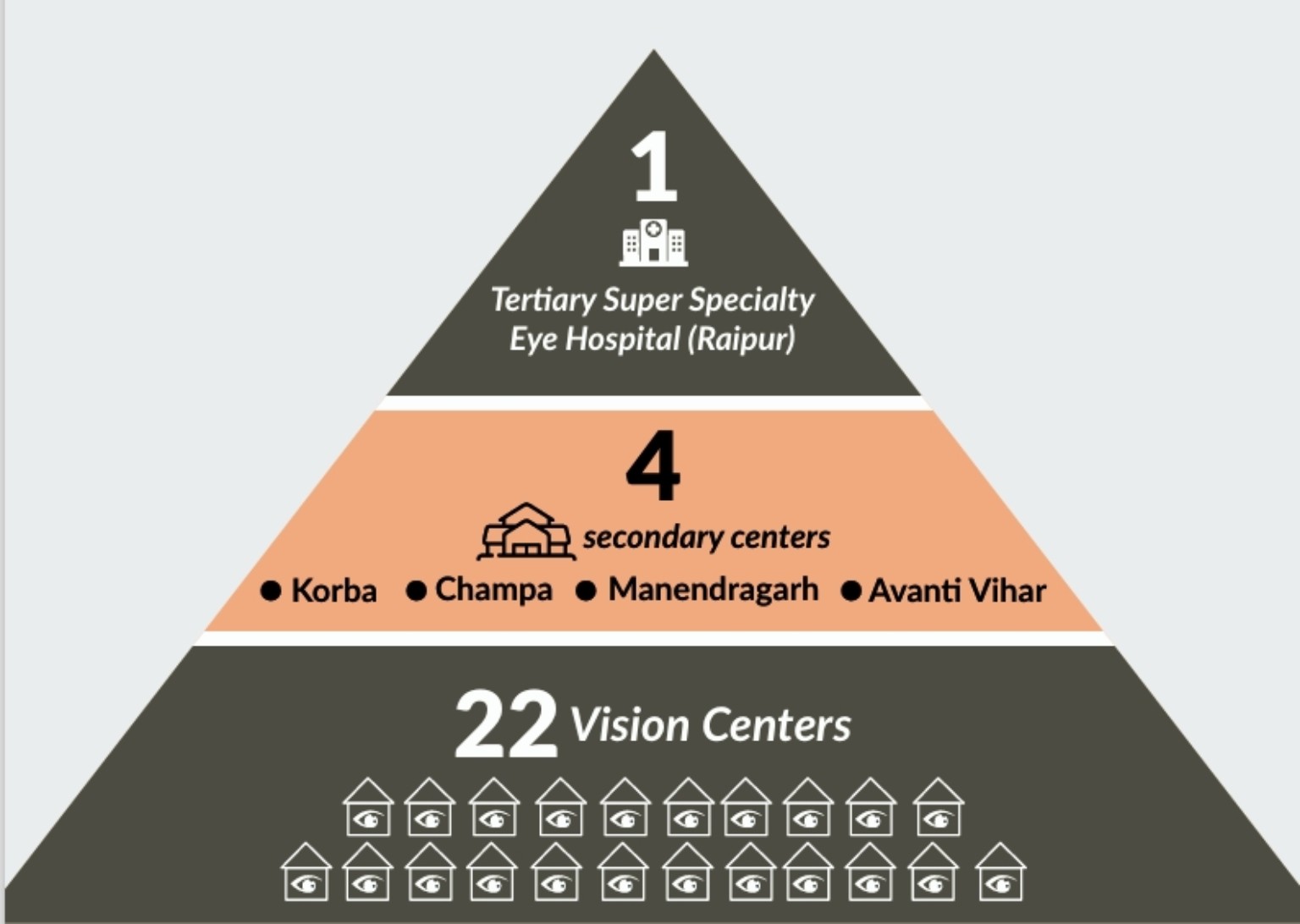
Most eye surgeries need 2–4 follow-up visits. Travelling to Raipur each time is hard for families from Korba, Champa, Kanker or Gariaband. A hospital with a network of centres across Chhattisgarh lets you finish follow-up close to home.
6. What other patients say
Read recent Google reviews, but look for details — which doctor, which surgery, how the staff behaved — rather than star numbers alone. SGVEH's main hospital is rated 4.7★ by more than 15,000 patients on Google.
Quick checklist to carry
- Which specialist will see me, and what is their training?
- Which tests will be done today, and are they in-house?
- What exactly is my diagnosis and what are the options?
- What is the total cost and what is included?
- Where will my follow-up happen?
- Whom do I call if something goes wrong at night?
Frequently asked questions
Which is the best eye hospital in Raipur?
It depends on your eye problem. Look for the right sub-specialist, in-house diagnostics, NABH safety systems, clear costs and nearby follow-up. SGVEH at Pachpedi Naka meets these criteria with 11 specialists and 30 centres in Chhattisgarh.
Is NABH accreditation important for an eye hospital?
Yes. NABH means safety, infection-control and patient-care processes are independently audited — important for any surgery.
Where is Shri Ganesh Vinayak Eye Hospital in Raipur?
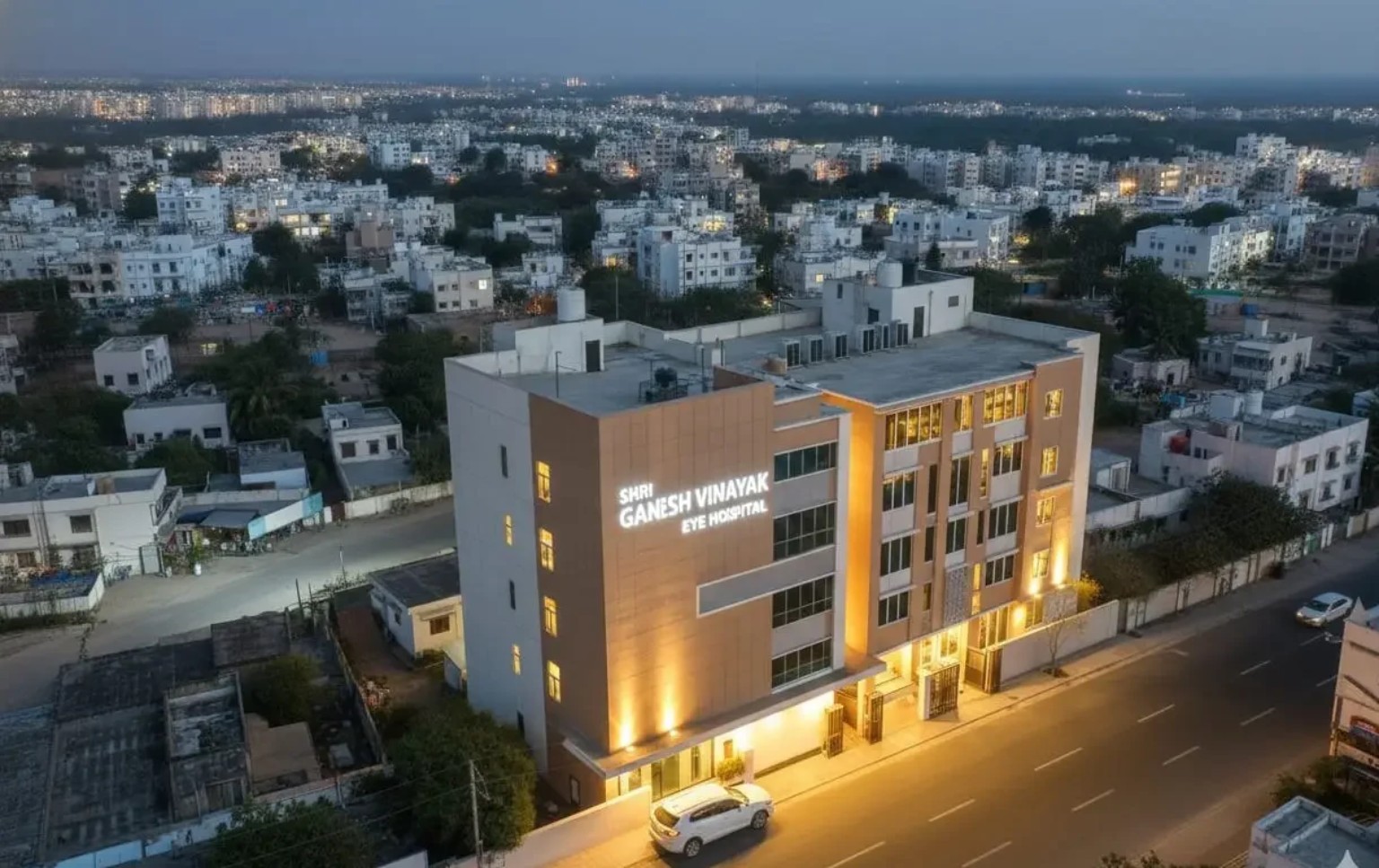
Opposite Colors Mall, Dhamtari Road, Pachpedi Naka, Raipur. Call or WhatsApp +91 9644902896.
Related reading
This article is for general education and does not replace a personal eye examination. Diagnosis and treatment vary from patient to patient.
 Team · Trust · Technology