
Flash Updates
Largest Eye Care
22 Vision Centers
NABH Accredited
Since 2015

Shri Ganesh Vinayak Eye Hospital (SGVEH) Best Eye Care Network & Super Specialty Eye Hospital in Chhattisgarh & Central India Best Eye Hospital in Raipur Best Eye Hospital in Chhattisgarh Best Eye Hospital in Central India Best Eye Care Hospital in Chhattisgarh Best Eye Care Network in Central India Most Trusted Eye Hospital in Chhattisgarh Best Eye Specialist in Raipur Best Eye Doctor in Chhattisgarh Top Eye Specialists in Central India Advanced Eye Surgery & Treatments Cataract Surgeon in Raipur Best Cataract Surgery Hospital in Chhattisgarh Phaco Cataract Surgery Premium IOL Cataract Surgery ICL Surgery in Raipur IPCL Surgery in Chhattisgarh Advanced Vision Correction Surgery Squint Treatment in Raipur Squint Eye Surgery Hospital Pediatric Squint Specialist Retina & Vitreous Services (High SEO Value) Best Retina Surgeon in Raipur Best Retina Surgeon in Chhattisgarh Retina Specialist in Central India Retina Treatment Hospital Diabetic Retinopathy Treatment Retinal Detachment Surgery Macular Degeneration Treatment Vitrectomy Surgery Oculoplastic & Lacrimal Services Oculoplastic Surgeon in Raipur Oculoplastic Surgery Hospital in Chhattisgarh DCR Surgery in Raipur Endoscopic DCR Surgery PTR (Ptosis) Surgery Eyelid Surgery & Reconstruction Advanced Eye Diagnostics OCT Scan in Raipur OCT Angiography (OCTA) Fundus Photography Digital Fundus Imaging Advanced Retina Diagnostics Center Modern Eye Testing Facilities Complete Eye Care Network Comprehensive Eye Care Center Super Specialty Eye Hospital Eye Hospital in Raipur Eye Hospital in Jagdalpur Best Eye Hospital in Jagdalpur Eye Hospital in Champa Eye Hospital in Korba Eye Hospital in Ambikapur Eye Hospital in Dhamtari Eye Hospital in Kunkuri Eye Hospital in Chhattisgarh Eye Care Hospital in Central India Eye Hospital Network in Odisha & Chhattisgarh Brand Variations (SEO Safety) Shri Ganesh Vinayak Eye Hospital Shree Ganesh Vinayak Eye Hospital SGVEH – Best Eye Care & Retina Center

Eye Allergy (Allergic Conjunctivitis): Causes, Symptoms & Treatment

Allergy & Immunology Eye Care

Eye Allergy (Allergic Conjunctivitis):
Relief from Itch & Redness

Constant itching, watering, or swollen eyes? Seasonal changes and pollution in Raipur & Chhattisgarh often trigger allergic conjunctivitis. Get expert relief today.

Direct WhatsApp: 7880177784

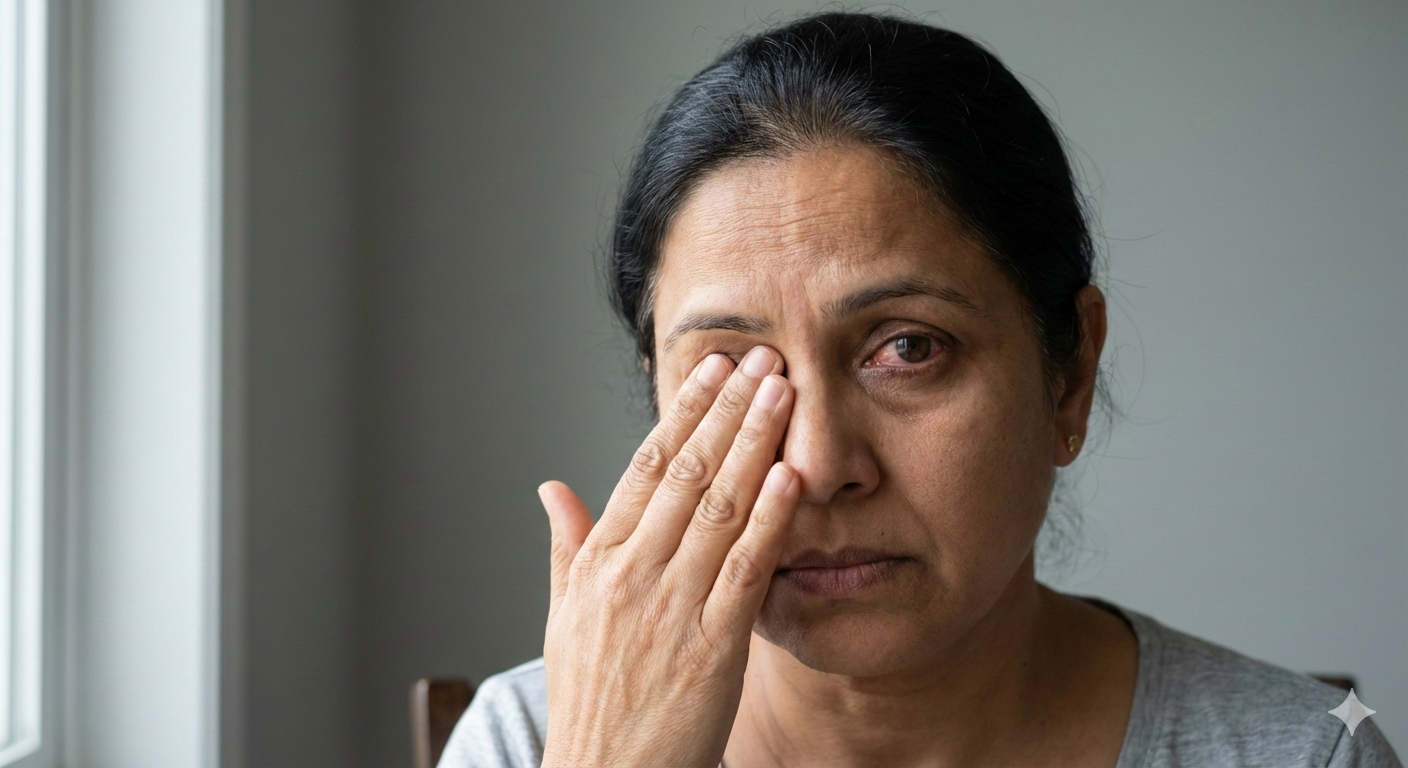
Eye allergy symptoms illustration

What Is Eye Allergy?

Eye allergy, or allergic conjunctivitis, occurs when your eyes react to irritants like dust, pollen, or smoke. The immune system mistakenly defends against these substances by releasing histamines, which cause inflammation. In industrial hubs like Raipur, Bhilai, and Korba, high particulate matter in the air makes this condition very common.

Fig 1: Common environmental triggers that cause eye allergies.

Common Triggers

🏭 Pollution & Dust

High AQI and construction dust are major triggers in urban Chhattisgarh.

🌸 Seasonal Pollen

Flowering plants and changing weather often cause "Spring Catarrh".

🐾 Pet Dander

Microscopic skin flakes from cats or dogs can cause immediate itching.

💄 Cosmetics

Expired makeup or contact lens solutions can irritate sensitive eyes.

Symptoms: Is it an Allergy?

Unlike bacterial infections, allergies usually affect both eyes simultaneously.

  • Intense itching (the hallmark symptom)
  • Redness in the white part of the eye
  • Watery, clear discharge (not sticky/yellow)
  • Swollen, puffy eyelids
  • Burning or stinging sensation
  • Sensitivity to light

Did You Know?

Rubbing makes it worse!

Rubbing your eyes releases more histamine, which increases the itching. It creates a vicious cycle. Instead, try a cold compress or consult a doctor for anti-allergic drops.

Dr Charudutt Kalamkar - Eye Specialist Raipur
Expert Allergy Management

Dr. Charudutt Kalamkar (MBBS • MS AIIMS)

Dr. Charudutt Kalamkar is a distinguished ophthalmologist trained at AIIMS, New Delhi. He specializes in diagnosing the root cause of chronic allergies and providing long-term relief plans.

✔️ Advanced Allergy Care ✔️ Dry Eye Management ✔️ Cornea Services ✔️ Pediatric Allergies

Why Patients Trust Him: He moves beyond temporary relief drops to identify allergens and strengthen your eye's natural defense.

Frequently Asked Questions

No. Unlike "Pink Eye" (Conjunctivitis caused by bacteria/virus), allergic conjunctivitis is not contagious. You cannot spread it to others.
In most cases, no. However, severe chronic allergies (like Vernal Keratoconjunctivitis in children) can damage the cornea if left untreated. Frequent rubbing can also weaken the cornea (Keratoconus).
Cold compresses (ice packs wrapped in cloth) provide immediate relief. Artificial tears (lubricating drops) can wash away allergens. Avoid rubbing your eyes.
You can book an appointment at SGVEH Raipur by clicking the "Consult Eye Specialist" button above or messaging us on WhatsApp at 7880177784.

Why Do My Eyes Feel Dry All the Time?

Dry Eye & Computer Vision Clinic

Why Do My Eyes Feel
Dry All The Time?

Burning, stinging, or a gritty feeling? Dry Eye Disease (DED) is more than just discomfort—it affects your vision and productivity. Get expert care in Raipur & Chhattisgarh.

Direct WhatsApp: 7880177784

Dry eye syndrome illustration

What Is Dry Eye Syndrome?

Dry Eye Syndrome occurs when your eyes do not produce enough tears, or more commonly, when the tears evaporate too quickly. A healthy tear film has three layers: Oil, Water, and Mucus. If the oil layer is blocked (Meibomian Gland Dysfunction), tears dry up instantly.

Fig 1: The 3 layers of healthy tears (Lipid, Aqueous, Mucin). Imbalance here causes Dry Eye.

Why is this happening to me?

💻 Computer Vision

We blink 66% less when looking at screens, causing rapid tear evaporation.

❄️ AC & Environment

Air conditioning and Raipur's dry heat strip moisture from the eye surface.

🕰️ Age & Hormones

Tear production naturally drops after 40, especially in women post-menopause.

💊 Medications

Antihistamines, BP meds, and antidepressants often reduce tear secretion.

Symptoms of Chronic Dry Eye

It's not just "dryness". Watch for these signs:

  • Grittiness: Feeling like sand is in your eye.
  • Watering: Paradoxically, dry eyes water excessively (reflex tears).
  • Fluctuating Vision: Blurry vision that clears after blinking.
  • Light Sensitivity: Difficulty driving at night or in bright sun.
  • Eye Fatigue: Heavy eyes after reading or computer work.

Expert Tip

The 20-20-20 Rule

To reduce digital eye strain: Every 20 minutes, look at something 20 feet away for 20 seconds. This resets your blink rate and relaxes eye muscles.

Dr Charudutt Kalamkar - Eye Specialist Raipur
Medical Director - SGVEH

Dr. Charudutt Kalamkar (MBBS • MS AIIMS)

Dr. Charudutt Kalamkar is a renowned ophthalmologist with over two decades of experience. He specializes in advanced ocular surface disorders, moving beyond simple eye drops to treat the root cause of Dry Eye.

✔️ Tear Film Analysis ✔️ Meibomian Gland Therapy ✔️ Ocular Surface Care ✔️ Computer Vision Syndrome

Why Patients Trust Him: He offers personalized treatment plans that restore long-term comfort and visual clarity.

Frequently Asked Questions

This is a reflex! When your eyes are dry and irritated, the brain sends a signal to flood the eye with tears. However, these are "emergency wash" tears (mostly water) and lack the oil needed to lubricate properly.
Yes. A smooth tear film is essential for clear focus. If the film is broken, vision fluctuates. If you blink and your vision clears up, it is likely due to dryness.
For many, it is a chronic condition that needs management rather than a "cure." However, with proper treatment (drops, lifestyle changes, gland therapy), symptoms can be almost entirely eliminated.
You can book a comprehensive Dry Eye Evaluation at SGVEH Raipur by clicking the button above or messaging us on WhatsApp at 7880177784.

Squint (Strabismus) Treatment in Raipur, Chhattisgarh — Eye Alignment & Vision Development Care

Raipur • Chhattisgarh • Central India • Odisha • Korba • Champa • Jagdalpur • Dhamtari

Squint (Strabismus) Treatment in Raipur, Chhattisgarh — Eye Alignment & Vision Development Care

Shri Ganesh Vinayak Eye Hospital (SGVEH) provides complete squint (strabismus) evaluation and treatment in Raipur. Squint can impact binocular vision (both eyes working together), depth perception, reading comfort, and in children may lead to lazy eye (amblyopia) if not treated on time. Patients visit SGVEH from across Chhattisgarh and Central India including Korba, Champa, Jagdalpur, Dhamtari and nearby Odisha.

Squint correction and eye alignment treatment in Raipur, Chhattisgarh, India
Squint / Strabismus • Eye Alignment • Binocular Vision

Quick Overview

Squint (strabismus) means the eyes are not aligned in the same direction. One eye may turn in/out/up/down. Early diagnosis helps improve eye coordination and reduce risk of amblyopia (lazy eye), especially in children.

Child Squint Adult Squint Double Vision Surgery Planning

Early evaluation is recommended for children. For adults with sudden squint or double vision, evaluation should be done promptly.

Doctor Focus

Squint Evaluation & Treatment Guidance in Raipur — Dr. Charudutt Kalamkar

At SGVEH, squint treatment planning includes detailed evaluation of vision, refraction (glasses power), alignment measurements and binocular vision assessment. The approach may include glasses, amblyopia therapy, exercises and surgery planning when required—based on individual diagnosis and goals.

Dr Charudutt Kalamkar eye specialist in Raipur Chhattisgarh India

Dr. Charudutt Kalamkar

MS (AIIMS, New Delhi) • MBBS (AIIMS, New Delhi)

Cataract & Refractive Surgery • Glaucoma • Neuro Ophthalmology • Eye Care Planning

Trusted eye specialist in Raipur, serving patients across Chhattisgarh and Central India (Korba, Champa, Jagdalpur, Dhamtari) and nearby Odisha.

Note: Final specialist allocation and treatment plan depend on your clinical findings after examination.

Detailed alignment measurement
Binocular vision assessment
Treatment planning & counselling
Follow-up and monitoring

Common Signs of Squint (Strabismus)

Eye Turning In/Out

One eye may deviate inward (esotropia) or outward (exotropia), sometimes more visible when tired.

Head Tilt / Face Turn

Some patients tilt the head or turn the face to maintain comfortable vision.

Double Vision (Adults)

New-onset squint with double vision should be evaluated to identify the cause.

Lazy Eye Risk (Children)

Squint can cause amblyopia. Early diagnosis improves long-term visual development.

Squint Evaluation & Treatment at SGVEH (Step-by-Step)

1

Vision Test + Refraction

We check vision and glasses power. Sometimes correcting refractive error improves alignment.

2

Alignment Measurement

We measure squint angle, eye movements and fusion to plan treatment accurately.

3

Amblyopia (Lazy Eye) Therapy (If Needed)

May include patching or other therapy—especially for children—to improve vision in the weaker eye.

4

Non-Surgical / Surgical Planning

Depending on type, plan may include exercises, prisms or squint surgery (eye muscle alignment) when required.

5

Follow-up

Follow-ups help maintain alignment and ensure stable vision development.

Need squint evaluation in Raipur (Child or Adult)?

Frequently Asked Questions (FAQ)

Can squint be corrected without surgery?

In some cases, yes—glasses, amblyopia therapy, prisms or exercises may help. Surgery is advised when needed for stable alignment.

Is squint treatment only for children?

No. Adults can also benefit for alignment, comfort and double vision control—depending on the cause and duration.

Does squint always cause lazy eye?

Not always, but it increases risk in children. Early treatment reduces risk of permanent visual reduction.

How do I book an appointment?

You can WhatsApp or call SGVEH at +91 78801 77784 for appointment slots and required tests.

Refractive Surgery in Raipur, Chhattisgarh — PRK • ICL/IPCL (Glasses Removal Options)

Raipur • Chhattisgarh • Central India • Odisha • Korba • Champa • Jagdalpur • Dhamtari

Refractive Surgery in Raipur, Chhattisgarh — PRK • ICL/IPCL (Glasses Removal Options)

Shri Ganesh Vinayak Eye Hospital (SGVEH) provides advanced refractive surgery planning in Raipur to reduce dependence on glasses or contact lenses. We offer evaluation and suitable options including PRK and implantable lens procedures like ICL / IPCL. Patients visit us from across Chhattisgarh and Central India, including Korba, Champa, Jagdalpur, Dhamtari and nearby Odisha.

Refractive surgery PRK ICL IPCL in Raipur, Chhattisgarh, India
Refractive Surgery • PRK • ICL/IPCL • Glasses-Free Planning

Quick Overview

Refractive surgery is designed to reduce dependence on spectacles by correcting power (myopia, hyperopia, astigmatism) using laser surface procedures like PRK or implantable lenses like ICL/IPCL for suitable candidates. A detailed checkup is essential to choose the safest option for your eyes.

PRK ICL / IPCL Astigmatism Planning Pre-op Safety Checks

Not everyone is a candidate. Cornea thickness, power stability, dry eye, and retina health matter—so proper screening is key.

Specialist Highlight

Refractive Surgery Planning in Raipur, Chhattisgarh

SGVEH focuses on safe eligibility evaluation, realistic outcome counselling, and structured follow-up for stable, comfortable vision.

Dr Charudutt Kalamkar refractive surgeon in Raipur Chhattisgarh India

Dr. Charudutt Kalamkar

MS (AIIMS, New Delhi) • MBBS (AIIMS, New Delhi)

Refractive Surgery • Cataract • Glaucoma • Neuro Ophthalmology

Patients visit from Raipur, across Chhattisgarh and Central India including Korba, Champa, Jagdalpur, Dhamtari and Odisha.
Eligibility & safety-first approach
PRK & ICL/IPCL counselling
Dry eye & cornea evaluation
Post-procedure follow-up

Refractive Surgery Options at SGVEH

PRK (Surface Laser)

Suitable in selected cases. Cornea surface reshaping helps reduce spectacle power when corneal parameters allow.

ICL / IPCL (Implantable Lens)

A lens is placed inside the eye to correct higher powers in suitable candidates, especially when laser options are not ideal.

Astigmatism Correction Planning

Detailed measurements guide customized correction for cylindrical power (astigmatism) when appropriate.

Custom Counselling (Lifestyle)

Night driving, screen work, sports and dryness—planning is tailored for comfort and realistic expectations.

Who Should Consider a Refractive Surgery Consultation?

Stable Glasses Power

Power should generally be stable before considering surgery. We confirm stability during evaluation.

High Spectacle Power

High myopia may be better suited for ICL/IPCL in eligible cases, after retina and eye health checks.

Contact Lens Intolerance

If lenses cause dryness, irritation, or allergies, an evaluation can help explore options.

Active Lifestyle / Sports

People who want freedom from glasses for daily activities often explore refractive surgery options.

Want to check eligibility for PRK / ICL / IPCL in Raipur?

Refractive Surgery Evaluation at SGVEH (Step-by-Step)

1

Vision & Refraction Testing

We measure your glasses power, check stability, and assess best-corrected vision.

2

Cornea Check (Shape + Thickness)

Corneal thickness and topography help decide laser safety and detect keratoconus risk.

3

Dry Eye & Surface Assessment

Dry eye can affect comfort and outcomes—treated and optimized before proceeding.

4

Lens & Eye Health Evaluation

We check lens status and overall eye health. For high powers, retinal evaluation may be advised.

5

Option Selection + Counselling

We suggest the safest option (PRK vs ICL/IPCL) with expected outcomes, precautions and follow-up plan.

Frequently Asked Questions (FAQ)

Which is better: PRK or ICL/IPCL?

It depends on cornea thickness, power, eye health and lifestyle. PRK is a laser surface procedure; ICL/IPCL is an implantable lens option. The best choice is decided after a full evaluation.

Is refractive surgery safe?

With proper screening and correct case selection, outcomes are generally good. Safety depends on corneal parameters, dryness control, and overall eye health.

Will I be completely glasses-free?

Many people reduce dependence on glasses significantly, but results vary by power, healing response and future age-related changes. Counselling helps set realistic expectations.

How long does recovery take?

Recovery depends on the procedure. Many patients resume routine activities soon, but vision stabilization can take days to weeks depending on the option selected.

Retina Problems: Best Retina Specialist in Raipur

Raipur • Chhattisgarh • Central India • Odisha • Korba • Champa • Jagdalpur • Dhamtari • Bilaspur • Raigarh • Ambikapur

Retina Problems: Best Retina Specialist in Raipur

Shri Ganesh Vinayak Eye Hospital (SGVEH) provides advanced retina and uvea services in Raipur, including diabetic retinopathy treatment, retinal detachment evaluation, macular disease management, OCT imaging, and retina laser procedures. Patients visit us from across Chhattisgarh and Central India, including Korba, Champa, Jagdalpur, Dhamtari, Bilaspur, Raigarh and nearby Odisha.

Retina and uvea services in Raipur, Chhattisgarh, India - SGVEH
Retina & Uvea • OCT • Laser • Vitreoretina Care

Quick Overview

The retina is the light-sensitive layer inside the eye. Retina problems can damage vision silently—especially in diabetes. Early diagnosis using OCT and detailed retina examination helps protect eyesight and prevent permanent vision loss.

OCT / Retina Imaging Diabetic Retina Screening Retina Laser Uveitis / Inflammation Macula Care Vitreoretina Planning

Diabetes, sudden vision drop, flashes, floaters, or a curtain-like shadow can be retina warning signs. Early retina evaluation is the safest move.

Specialist Team

Retina & Uvea Specialists in Raipur, Chhattisgarh

SGVEH retina care focuses on early diagnosis, precise imaging, treatment planning and structured follow-up for stable vision.

Dr Jayesh Patil Retina Specialist in Raipur Chhattisgarh India - SGVEH

Dr. Jayesh Patil

MBBS • MS • Retina Consultant (Sankara Nethralaya, Chennai)

Retinal Detachment • Diabetic Retinopathy • Vitrectomy

Retina specialist in Raipur serving patients across Chhattisgarh and Central India.
Dr Shubhank Khare Retina Specialist in Raipur Chhattisgarh India - SGVEH

Dr. Shubhank Khare

MBBS • MS • FVRs (Aravind Eye Hospital, Coimbatore)

Complex Retina • Uveitis • Laser & Diagnostics

Retina & uvea care for patients from Korba, Champa, Jagdalpur, Dhamtari and Odisha.
OCT / imaging-based diagnosis
Diabetes retina screening
Laser & injections counselling
Structured follow-up

Retina Conditions We Treat

Diabetic Retinopathy

Screening, grading and management to prevent vision loss in diabetes.

Retinal Detachment

Urgent evaluation for flashes, floaters and curtain-like vision shadow.

Macular Diseases

Macular edema, AMD and central vision issues evaluated with OCT.

Uveitis / Inflammation

Detailed workup for intraocular inflammation and retina involvement.

When to Consult a Retina Specialist

Sudden Vision Drop

Sudden blurring or distortion can indicate macular or retinal problems.

Flashes / Floaters

New flashes or many floaters need retina evaluation to rule out tear/detachment.

Diabetes (Even if Vision OK)

Diabetic retinopathy can be silent early—regular screening protects vision.

Curtain-like Shadow

A dark curtain in vision can be a retinal detachment warning sign.

Retina Evaluation & Treatment at SGVEH (Step-by-Step)

1

History + Vision Testing

We review symptoms, diabetes/BP history, check vision and eye pressure.

2

Dilated Retina Examination

Detailed retina evaluation to detect tears, bleeding, swelling, degeneration.

3

OCT / Imaging (as required)

OCT scans retina layers and helps detect macular edema and subtle changes.

4

Treatment Planning

Plan may include observation, medicines, laser, injections, or surgery depending on diagnosis.

5

Follow-up & Monitoring

Retina conditions often need scheduled follow-ups to protect long-term vision.

Need retina checkup / OCT / diabetic retina screening?

Frequently Asked Questions (FAQ)

Do diabetic patients need retina checkup even if vision is clear?

Yes. Diabetic retinopathy can be silent early. Regular retina screening helps prevent vision loss.

What is OCT and why is it done?

OCT is an imaging scan that shows retina layers. It helps detect macular swelling and retina changes accurately.

Are floaters and flashes serious?

New floaters/flashes can indicate retina tear or detachment. A dilated retina exam is advised.

Can retina problems be treated?

Many retina conditions can be managed with early diagnosis using medicines, laser, injections or surgery depending on the case.

Cornea Disease Treatment in Raipur – Complete Guide

Raipur • Chhattisgarh • Central India • Odisha • Korba • Champa • Jagdalpur • Dhamtari

Cornea Disease Treatment in Raipur – Complete Guide

Shri Ganesh Vinayak Eye Hospital (SGVEH) provides advanced cornea care in Raipur including cornea transplant, endothelial keratoplasty (DSEK/DSAEK, DMEK), lamellar keratoplasty (DALK), keratoconus management and C3R (corneal cross-linking). Patients visit SGVEH from across Chhattisgarh and Central India, including Korba, Champa, Jagdalpur, Dhamtari and nearby Odisha.

Cornea care and cornea transplant services in Raipur, Chhattisgarh, India
Cornea Care • Cornea Transplant • DSEK/DSAEK • Keratoconus (C3R)

Quick Overview

The cornea is the clear front window of the eye. When it becomes scarred, swollen, infected or misshapen, vision can reduce significantly. Modern cornea procedures—especially partial layer transplants like DSEK/DSAEK—can restore clarity and improve quality of life.

Cornea Transplant DSEK / DSAEK DMEK / DALK Keratoconus (C3R)

If you have severe pain, redness, sudden drop in vision, or white spot on the cornea, consult urgently—corneal ulcers can progress fast.

Cornea & Transplant Specialist

Dr. Amrita Mukherjee — Cornea Specialist in Raipur, Chhattisgarh (Central India)

Dr. Amrita Mukherjee focuses on modern cornea care—especially corneal transplant planning and advanced techniques to restore corneal clarity. Her work has helped many patients regain vision through corneal transplantation and structured post-operative care.

Dr Amrita Mukherjee cornea specialist in Raipur Chhattisgarh India

Dr. Amrita Mukherjee

MBBS • DOMS • Cornea Consultant (LV Prasad Eye Institute)

Cornea • Corneal Transplant (DALK/DSAEK/DMEK) • C3R (Keratoconus)

Serving patients from Raipur, across Chhattisgarh and Central India including Korba, Champa, Jagdalpur, Dhamtari and nearby Odisha. Many patients have received “new light” in life after corneal transplant and rehabilitation care.
Detailed cornea evaluation
Cornea transplant planning
DSEK/DSAEK & lamellar options
Follow-up & rehabilitation

Cornea Problems We Treat

Keratoconus

Progressive cornea thinning and shape change. Managed with specialty lenses and C3R when suitable.

Corneal Ulcer / Infection

Redness, pain, watering and white spot. Requires urgent diagnosis and treatment to prevent scarring.

Corneal Scar / Opacity

Scarring after infection/trauma can block vision. Transplant or lamellar procedures may restore clarity.

Corneal Swelling (Endothelial Failure)

Blurred vision, morning haze. Often treated with endothelial transplant like DSEK/DSAEK or DMEK.

Advanced Cornea Procedures at SGVEH

1

Cornea Transplant (Keratoplasty)

Corneal transplant replaces diseased corneal tissue with healthy donor tissue. Depending on the problem, transplant can be full-thickness or partial layer (lamellar).

2

DSEK / DSAEK Surgery (Endothelial Keratoplasty)

DSEK/DSAEK is a modern partial-thickness transplant where the damaged inner corneal layer is replaced. It is commonly used for corneal swelling due to endothelial failure—often with faster rehabilitation and better corneal strength than older full-thickness methods.

3

DMEK (Advanced Endothelial Transplant)

DMEK replaces an even thinner inner layer. Suitable cases may experience excellent visual outcomes under expert planning.

4

DALK (Lamellar Transplant for Keratoconus / Scars)

DALK keeps the healthy inner layer and replaces the front corneal layers. Often used in keratoconus and selected corneal scars.

5

C3R (Corneal Cross-Linking) for Keratoconus

C3R aims to stabilize keratoconus progression by strengthening corneal collagen. It is often combined with specialty contact lens planning for best functional vision.

Need guidance for cornea transplant or DSEK/DSAEK surgery?

Frequently Asked Questions (FAQ)

What is DSEK / DSAEK surgery?

DSEK/DSAEK is an endothelial (inner-layer) corneal transplant used for corneal swelling due to endothelial failure. It replaces the damaged inner layer with donor tissue.

When is cornea transplant recommended?

If corneal scarring, swelling or keratoconus has reduced vision significantly and glasses/contacts cannot help enough, transplant or lamellar procedures may be advised after evaluation.

What is keratoconus and which treatment is best?

Keratoconus is progressive cornea thinning/shape change. Early cases may benefit from glasses or specialty lenses. C3R helps stabilize progression; advanced cases may need DALK or transplant depending on corneal status.

How long does recovery take after cornea transplant?

Recovery varies by procedure type (DSEK/DSAEK vs DMEK vs full-thickness transplant). Follow-ups and medicines are essential for healing and vision stabilization.

Types of Oculoplasty

Oculoplasty & Facial Aesthetics

Types of Oculoplasty:
A Complete Guide

Oculoplasty is the specialized microsurgery of the eyelids, tear ducts, and eye socket (orbit). Whether correcting a droopy eyelid (Ptosis) or treating watery eyes (DCR), we restore both function and natural appearance.

Direct WhatsApp: 7880177784

Dr. Rohit Rao S - Oculoplasty Specialist
Dr. Rohit Rao S
Oculoplasty Specialist (LV Prasad Alumni)

What Conditions Does Oculoplasty Treat?

Many people mistake eyelid or tear duct issues for general eye problems. Oculoplasty procedures are broadly classified into four categories based on the anatomical structure involved:

01

Eyelid Surgeries

Correcting malpositions for better vision and eye protection.

Fig 1: Ptosis (Drooping Eyelid) vs. Normal Eyelid Position.

Ptosis Correction

Surgical lifting of droopy upper eyelids. This clears the visual field and restores a youthful, alert look.

Entropion & Ectropion

Repairing eyelids that turn inward (rubbing the cornea) or outward (causing watering and redness).

Lid Tumor Removal

Precise excision of eyelid cysts or tumors followed by microscopic reconstruction.

02

Tear Duct Surgery (Lacrimal)

The permanent solution for persistent watering and sticky discharge.

Dacryocystorhinostomy (DCR)

When the tear drainage pipe (Nasolacrimal duct) is blocked, tears overflow onto the cheek. DCR Surgery creates a new bypass channel for tears to drain into the nose.

  • Relief from constant watering
  • Prevents recurrent infections
  • Advanced Endonasal DCR (No scar) available

Blocked tear ducts cause infection and watering.

03

Orbital Surgery

Thyroid Eye Disease

Managing bulging eyes (proptosis) and double vision caused by thyroid imbalance.

Orbital Fractures

Reconstructive surgery for eye socket fractures after accidents or trauma.

04

Cosmetic Enhancements

Blepharoplasty (Eye Lift)

Removal of excess skin and fat bags from eyelids for a refreshed look.

Botox & Fillers

Non-surgical options to reduce Crow's feet wrinkles and fill under-eye hollows.

Dr Rohit Rao S - Oculoplasty Specialist SGVEH
Oculoplasty & Orbit Consultant

Dr. Rohit Rao S (MBBS • MS • FACS)

Dr. Rohit Rao S is a distinguished surgeon trained at the prestigious L.V. Prasad Eye Institute. He specializes in high-precision oculoplastic surgeries, ensuring optimal functional recovery and aesthetic balance.

✔️ Ptosis & Eyelid Surgery ✔️ DCR (Watering Eyes) ✔️ Orbital Trauma ✔️ Aesthetic Procedures

Frequently Asked Questions

The main types are Eyelid Surgery (Ptosis, Entropion), Tear Duct Surgery (DCR), Orbital Surgery (for tumors/fractures), and Cosmetic Surgery (Blepharoplasty, Botox).
Yes, DCR is considered a long-term surgical solution for blocked tear ducts. It has a very high success rate in permanently stopping watering and infection.
No. While cosmetic procedures exist, most oculoplasty is "Functional"—meaning it is done to improve vision, stop pain, or treat infections/tumors.

Oculoplasty Surgery in Raipur – Cosmetic Eye Treatment Guide

Oculoplasty & Facial Aesthetics

Oculoplasty Surgery in Raipur – Cosmetic Eye Treatment Guide

Oculoplasty is a specialized field of medicine that focuses on the eyelids, tear ducts, and orbit (eye socket). It bridges the gap between ophthalmology and plastic surgery to restore both function and natural beauty.

  • ✅ Functional Eyelid Repair
  • ✅ Tear Duct Solutions (DCR)
  • ✅ Orbital Trauma Care
  • ✅ Cosmetic Enhancements

Direct WhatsApp: 7880177784

Oculoplasty services illustration

Why Do You Need an Oculoplastic Surgeon?

General eye doctors treat vision within the eye (like cataracts). Oculoplastic surgeons specialize in the structures around the eye. Whether it's a drooping eyelid blocking your vision or a blocked tear duct causing infection, these delicate areas require the precision of a specialist.

Our Expertise

Comprehensive Oculoplasty Services

Advanced care for medical and aesthetic needs.

Eyelid Surgery

Correction of drooping eyelids (Ptosis), inward/outward turning lids (Entropion/Ectropion), and removal of tumors.

Tear Duct (Lacrimal)

DCR Surgery to treat blocked tear ducts, stopping chronic watering and recurrent infections.

Orbital Surgery

Management of thyroid eye disease, orbital fractures (from trauma), and removal of orbital tumors.

Aesthetics

Cosmetic procedures like Blepharoplasty (eye lift), Botox, and fillers to rejuvenate the eye area.

Dr Rohit Rao S - Oculoplasty Specialist SGVEH
Oculoplasty & Orbit Consultant

Dr. Rohit Rao S (MBBS • MS • FACS)

Dr. Rohit Rao S is a distinguished surgeon with over 12 years of experience. Trained at the prestigious L.V. Prasad Eye Institute, he brings world-class expertise in functional and cosmetic oculoplasty to Raipur.

✔️ Ptosis Correction ✔️ Endonasal DCR ✔️ Orbital Trauma ✔️ Botox & Fillers

Frequently Asked Questions

It treats Ptosis (droopy eyelids), Entropion/Ectropion, Blocked Tear Ducts (watering eyes), Orbital Fractures, Thyroid Eye Disease, and also includes cosmetic procedures like Eyelid Lifts.
No. While cosmetic procedures are a part of it, most oculoplasty surgeries are functional—performed to improve vision, stop infection, or repair injury.
See a specialist if you have persistent watering, a lump on your eyelid, drooping that blocks vision, bulging eyes, or if you've had facial trauma.
You can book a consultation at SGVEH Raipur by clicking the button above or messaging us on WhatsApp at 7880177784.

Dr. Rohit Rao S – Leading Oculoplasty & Orbit Specialist in Raipur

Shri Ganesh Vinayak Eye Hospital (SGVEH) • Raipur

Dr. Rohit Rao S – Leading Oculoplasty & Orbit Specialist in Raipur

Dr. Rohit Rao S is a highly experienced Oculoplasty & Orbit Specialist in Raipur, Chhattisgarh, trained at the prestigious LV Prasad Eye Institute, Hyderabad. He specializes in ptosis surgery, DCR (tear duct surgery), eyelid tumors, orbital disorders, and cosmetic eye procedures, offering advanced functional and aesthetic eye care.

MBBS MS FACS Fellowship (LVPEI)

Portrait of Dr. Rohit Rao S, Oculoplasty and Orbit Specialist in Raipur

About Dr. Rohit Rao S

With over a decade of specialized experience, Dr. Rohit Rao S is recognized for his expertise in both functional and cosmetic eyelid & orbit surgeries. His training from LV Prasad Eye Institute ensures world-class precision, safety, and patient-centered care.

Focus: Restoring function, preserving vision, and enhancing natural appearance.

Core Specializations

  • Ptosis Surgery – Correction of drooping eyelids
  • DCR (Dacryocystorhinostomy) – Treatment for tear duct blockage
  • Eyelid Tumor Surgery – Safe removal & aesthetic reconstruction
  • Orbit Surgery – Treatment for orbital tumors, fractures, and trauma
  • BOTOX & Cosmetic Eye Procedures – Rejuvenation and wrinkle reduction

Why Choose Dr. Rohit Rao S in Raipur?

🎓

International-Level Training

Specialized fellowship training from the globally renowned LV Prasad Eye Institute.

🔬

Advanced Surgical Precision

Utilizing modern, minimally invasive techniques including scarless endonasal DCR.

👁️

Comprehensive Orbit Care

Expert, multidisciplinary management of complex orbital tumors and trauma.

🤝

Patient-Centered Approach

Customized treatment plans prioritizing your safety, comfort, and optimal outcomes.

FAQs – Oculoplasty & Orbit Surgery

What is Oculoplasty?

Oculoplasty is a super-specialty of ophthalmology that focuses on treating disorders of the eyelids, tear ducts (lacrimal system), and the orbit (the bony cavity surrounding the eye).

When should I consult an oculoplasty specialist?

You should seek a consultation if you experience drooping eyelids (ptosis), persistent watery eyes, eyelid swelling or lumps, suspected tumors around the eye, or have suffered orbital trauma.

Is DCR surgery painful?

DCR (Dacryocystorhinostomy) is usually performed under local or general anesthesia, making the procedure itself painless. Post-operative discomfort is generally mild and easily managed with prescribed medication.

Are cosmetic eye procedures safe?

Yes. When performed by a highly trained oculoplastic surgeon like Dr. Rohit Rao S, cosmetic eye procedures (like blepharoplasty or Botox) are incredibly safe and yield natural-looking results.

Consult the Leading Oculoplasty Specialist in Raipur

Whether you need functional correction to improve your vision or a cosmetic enhancement, expert care is available at SGVEH.

What Is Endothelial Corneal Transplant? A Complete Guide for Patients

Advanced Corneal Surgery

Endothelial Corneal Transplant:
Restore Clarity, Retain Strength

A revolutionary approach to treating corneal swelling. Unlike traditional transplants, Endothelial Keratoplasty (EK) replaces only the damaged inner layer—leaving the rest of your eye intact for faster, safer recovery.

Direct WhatsApp: 7880177784

Dr. Amrita Mukherjee - Cornea Specialist
Dr. Amrita Mukherjee
Cornea & Transplant Specialist (LVPEI Alumni)

Understanding the "Endothelium"

The cornea is like a 5-layer sandwich. The innermost layer, the Endothelium, acts as a pump, keeping fluid out of the cornea to keep it clear.

When these cells fail (due to Fuchs' Dystrophy or post-cataract swelling), the cornea swells and vision becomes cloudy. Endothelial transplant replaces just this pump layer, not the whole cornea.

Fig 1: The Endothelium is the single inner layer responsible for keeping the cornea clear.

The Procedures

DSAEK vs. DMEK: The Advanced Options

We offer both types of partial transplants tailored to your eye's condition.

Visualizing the difference: DMEK grafts are paper-thin, offering faster vision recovery.

DSAEK

Descemet's Stripping Automated Endothelial Keratoplasty

Replaces the endothelium + a thin layer of supporting tissue. It is easier to transplant and highly successful for complex eyes.

  • Proven track record
  • Good for eyes with previous surgeries

DMEK

Descemet's Membrane Endothelial Keratoplasty

Replaces only the endothelium membrane (ultra-thin). Offers the fastest visual recovery and lowest rejection risk.

  • Near-perfect anatomical restoration
  • Better vision quality

How is the Surgery Performed?

A suture-less (stitch-free) technique using an air bubble.

01

Removal

Through a tiny incision, the damaged endothelial layer is peeled off.

02

Insertion

The healthy donor graft is folded and gently inserted into the eye.

03

Unfolding

An air bubble is injected to unfold the graft and press it against your cornea.

04

Bonding

You lie on your back for a few hours while the air bubble bonds the graft naturally. No stitches needed.

Dr Amrita Mukherjee - Cornea Specialist SGVEH
Cornea & Microsurgery Director

Dr. Amrita Mukherjee (Fellow LVPEI)

Dr. Amrita Mukherjee is a leading Cornea Specialist with over 15 years of experience. Trained at the prestigious L.V. Prasad Eye Institute, she specializes in advanced lamellar keratoplasty (DSAEK/DMEK), eliminating the need for full transplants in many cases.

✔️ DSAEK & DMEK ✔️ Keratoconus Management ✔️ Corneal Trauma ✔️ Complex Cataracts

Frequently Asked Questions

Because we don't cut the whole cornea, the eye remains stronger (structurally intact). There are fewer/no stitches, faster visual recovery (weeks vs. months), and less risk of rejection.
No. It is performed under local anesthesia. You are awake but the eye is numb. Post-surgery discomfort is mild and feels like a speck of dust in the eye for a few days.
With proper care and steroid drops, endothelial grafts can last 10 years or more. Rejection rates for DMEK are extremely low (less than 1%).