
Endothelial Corneal Transplant:
Restore Clarity, Retain Strength
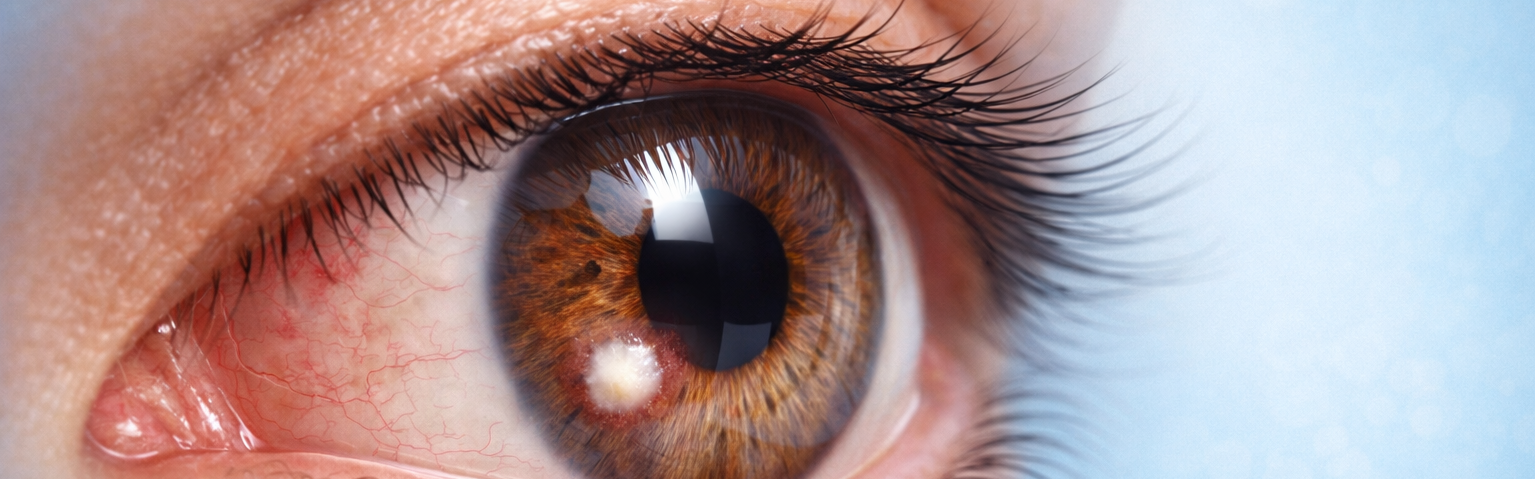
A revolutionary approach to treating corneal swelling. Unlike traditional transplants, Endothelial Keratoplasty (EK) replaces only the damaged inner layer—leaving the rest of your eye intact for faster, safer recovery.
Direct WhatsApp: 7880177784

Cornea & Transplant Specialist (LVPEI Alumni)
Understanding the "Endothelium"
The cornea is like a 5-layer sandwich. The innermost layer, the Endothelium, acts as a pump, keeping fluid out of the cornea to keep it clear.
When these cells fail (due to Fuchs' Dystrophy or post-cataract swelling), the cornea swells and vision becomes cloudy. Endothelial transplant replaces just this pump layer, not the whole cornea.
Fig 1: The Endothelium is the single inner layer responsible for keeping the cornea clear.
DSAEK vs. DMEK: The Advanced Options
We offer both types of partial transplants tailored to your eye's condition.
Visualizing the difference: DMEK grafts are paper-thin, offering faster vision recovery.
DSAEK
Descemet's Stripping Automated Endothelial Keratoplasty
Replaces the endothelium + a thin layer of supporting tissue. It is easier to transplant and highly successful for complex eyes.
- Proven track record
- Good for eyes with previous surgeries
DMEK
Descemet's Membrane Endothelial Keratoplasty
Replaces only the endothelium membrane (ultra-thin). Offers the fastest visual recovery and lowest rejection risk.
- Near-perfect anatomical restoration
- Better vision quality
How is the Surgery Performed?
A suture-less (stitch-free) technique using an air bubble.
Removal
Through a tiny incision, the damaged endothelial layer is peeled off.
Insertion
The healthy donor graft is folded and gently inserted into the eye.
Unfolding
An air bubble is injected to unfold the graft and press it against your cornea.
Bonding
You lie on your back for a few hours while the air bubble bonds the graft naturally. No stitches needed.
Dr. Amrita Mukherjee (Fellow LVPEI)
Dr. Amrita Mukherjee is a leading Cornea Specialist with over 15 years of experience. Trained at the prestigious L.V. Prasad Eye Institute, she specializes in advanced lamellar keratoplasty (DSAEK/DMEK), eliminating the need for full transplants in many cases.