
Keratoconus:
Advanced Corneal Care
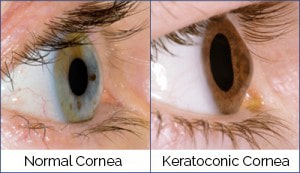
Keratoconus is a progressive condition where the cornea thins and bulges into a cone shape, causing distorted vision and light sensitivity.
Early diagnosis is key. We utilize C3R (Corneal Collagen Cross-Linking) and advanced mapping to stabilize your vision.

Dr. Amrita Mukherjee
MBBS • DOMS • Fellow (LV Prasad Eye Institute)
A specialist in advanced corneal transplants (DALK/DSAEK) and C3R, dedicated to preserving sight through precision and technology.
Understanding the Condition
Common Symptoms
- Frequent change in spectacle power
- Blurred vision even with glasses
- Halos and glare around lights
- Sudden worsening of vision
Primary Causes
While often genetic, chronic eye rubbing is a significant risk factor. It is most commonly diagnosed in teenagers and young adults.
Modern Treatment Solutions
C3R Therapy
Strengthens corneal fibers to stop the progression of the cone.
Scleral Lenses
Specialty contact lenses that provide crisp vision for irregular corneas.
Intacs Segments
Micro-inserts to flatten the cornea and improve visual acuity.
Corneal Transplant
Advanced DALK procedures for severe cases, replacing damaged tissue.
Frequently Asked Questions
Is Keratoconus permanent?
It is a progressive condition, but with modern treatments like C3R, the progression can be halted permanently, preserving your current vision level.
Can LASIK treat Keratoconus?
No, LASIK is generally avoided for Keratoconus patients as it can weaken the cornea further. C3R or Specialty Lenses are the preferred options.
How long is the recovery for C3R?
Most patients return to light activities within 3-5 days, though full visual stabilization may take a few weeks.
Protect Your Vision Today
Stop the progression of Keratoconus with Raipur's leading cornea experts.