
Shri Ganesh Vinayak Eye Hospital (SGVEH)
Computer Vision Syndrome (Digital Eye Strain) Computer Vision Syndrome (CVS), also known as Digital Eye Strain, is a group of eye and vision problems caused by prolonged use of computers, mobile phones, and digital screens. Common symptoms include eye strain, dryness, headache, blurred vision, and neck or shoulder pain.With increasing screen time among professionals, students, and children, early awareness and preventive measures are essential to protect long-term eye health.
Book Eye Checkup – 7880177784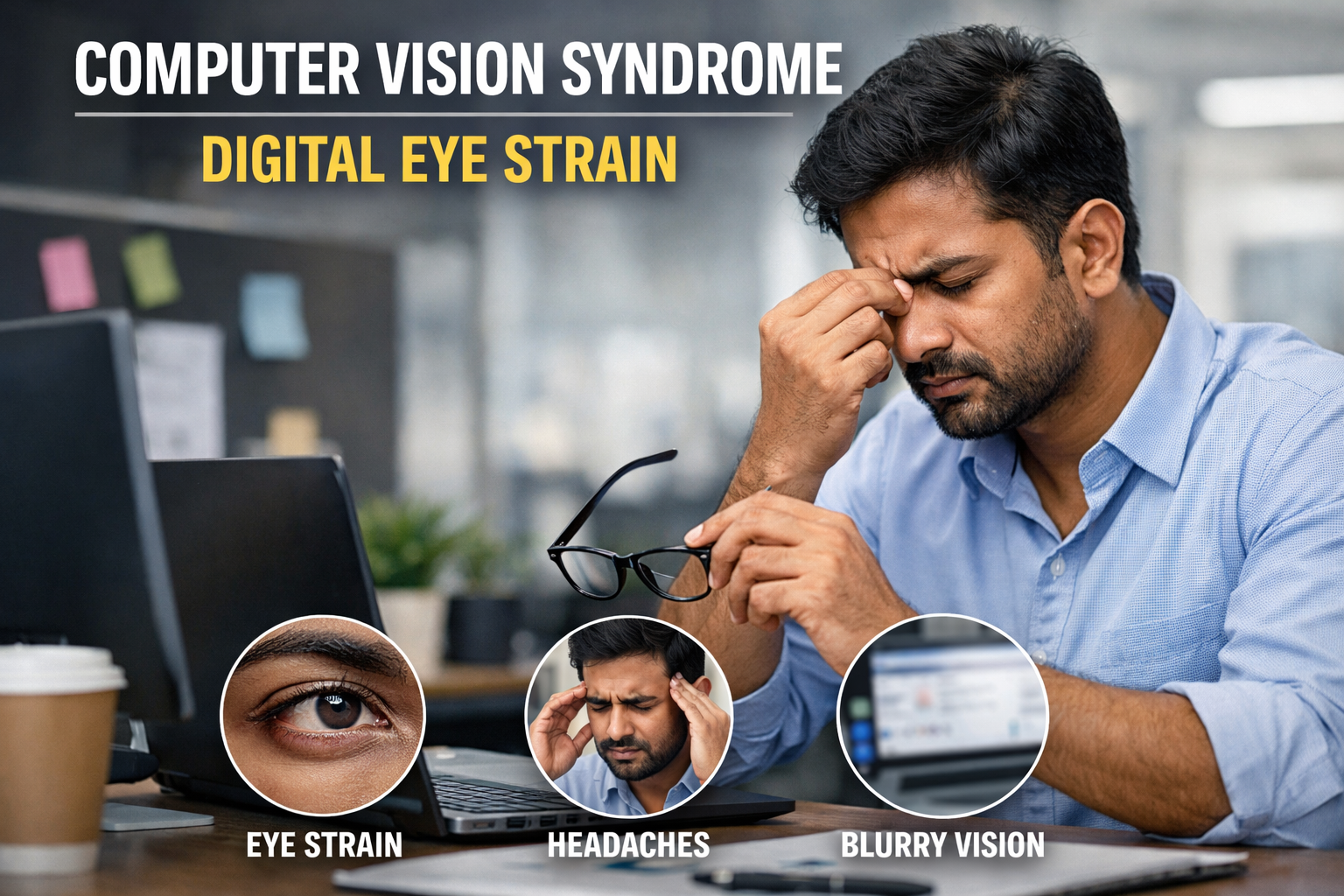
What Causes Computer Vision Syndrome?
- Prolonged screen exposure without breaks
- Reduced blinking while using digital devices
- Poor lighting or screen glare
- Incorrect viewing distance or posture
- Uncorrected refractive error (spectacle number)
Symptoms of Digital Eye Strain
- Eye strain or heaviness
- Dry, burning, or watery eyes
- Blurred or double vision
- Headaches
- Neck and shoulder pain
Prevention & Management
20-20-20 Rule
Every 20 minutes, look at something 20 feet away for 20 seconds.
Proper Screen Position
Keep screen 20-24 inches away and slightly below eye level.
Artificial Tears
Lubricating drops help relieve dryness.
Blue Light Protection
Use anti-glare screens or blue light filters if advised.
Correct Spectacles
Ensure updated prescription for digital work.
FAQs – Computer Vision Syndrome
Is Computer Vision Syndrome permanent?No, symptoms usually improve with rest, proper screen habits, and treatment.
Can children develop digital eye strain?Yes, especially with excessive mobile and tablet usage.
Do blue light glasses prevent eye strain?They may reduce glare and discomfort, but proper breaks are more important.
When should I see an eye specialist?If symptoms persist despite rest or interfere with daily work.
Protect Your Eyes in the Digital Era
Long screen hours are unavoidable, but eye damage is preventable. Schedule a comprehensive eye checkup today.
WhatsApp for AppointmentThis article is for general education and cannot diagnose an eye condition. Symptoms, suitability for surgery, costs and recovery vary. Please consult a qualified ophthalmologist for personalised advice.

 Team · Trust · Technology