Effects of Anti-Tuberculosis (TB) Medications on the Eyes
Certain anti-tuberculosis (TB) medicines, especially
Ethambutol, can affect the optic nerve and cause
vision problems such as blurred vision, color vision defects, or decreased visual acuity.
Early detection and regular eye monitoring help prevent permanent vision loss.
Patients undergoing TB treatment should have a baseline and periodic eye examination
to ensure safe continuation of therapy.
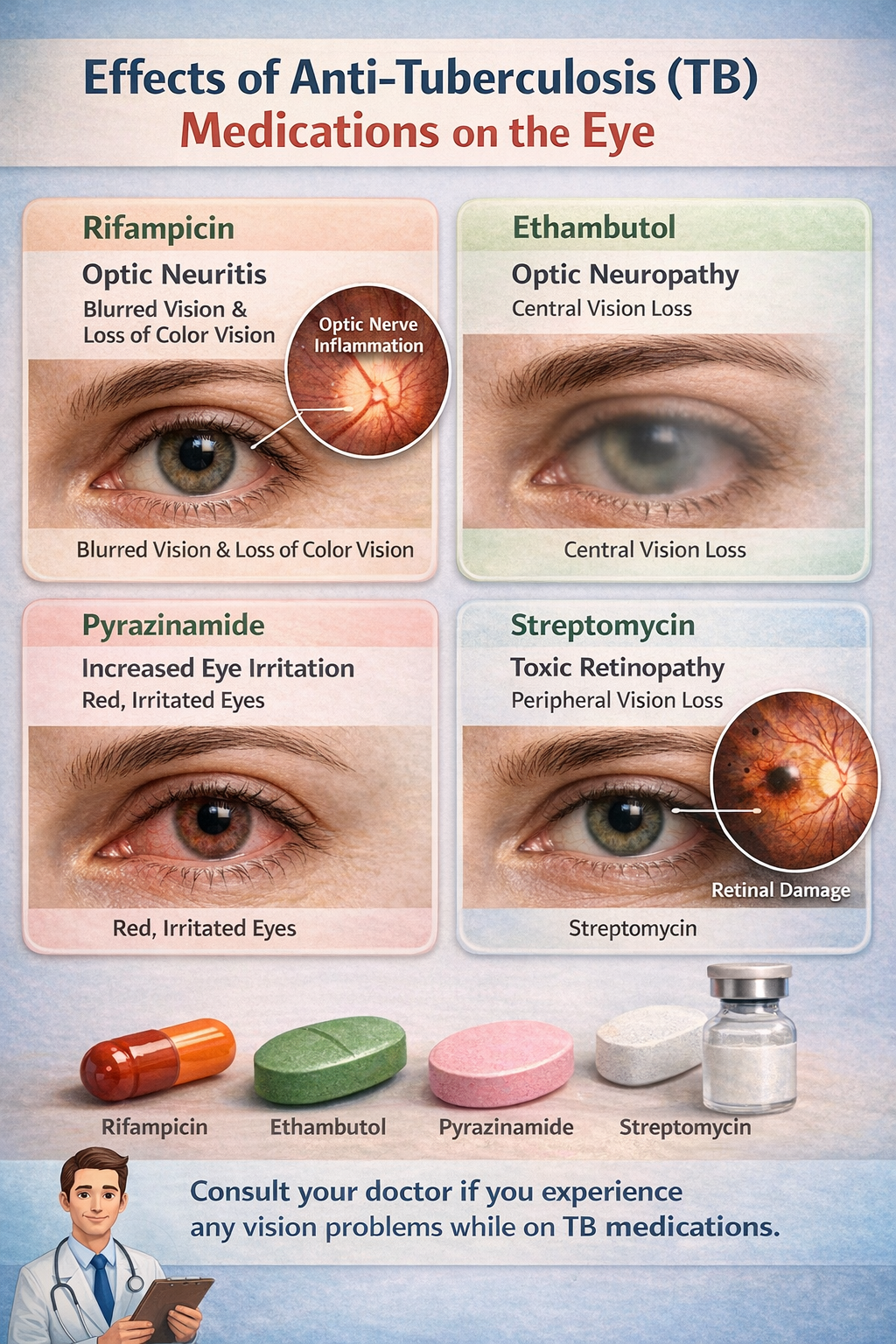
How Do TB Medicines Affect the Eyes?
Optic Neuritis – Inflammation of the optic nerve
Reduced Visual Acuity – Blurred or dim vision
Color Vision Defect – Difficulty distinguishing red and green
Visual Field Changes – Patchy or peripheral vision loss
Important: Vision changes during TB treatment must be reported immediately to both your physician and eye specialist.
Who is at Higher Risk?
High doses of Ethambutol
Long duration of TB therapy
Kidney disease patients
Elderly patients
Prevention & Monitoring
Baseline Eye Exam
Before starting TB medication.
Monthly Vision Check
Especially during Ethambutol therapy.
Color Vision Testing
Detect early optic nerve toxicity.
Immediate Reporting
Stop medication only after consulting physician.
FAQs – TB Medicines & Eye Health
Which TB medicine commonly affects vision?
Ethambutol is most commonly associated with optic nerve toxicity.
Are vision changes reversible?
If detected early and medication is adjusted, vision may improve. Delay may cause permanent damage.
Should I stop TB medication if vision blurs?
No. Immediately consult your treating physician and eye specialist before stopping medication.
How often should eye exams be done during TB treatment?
At baseline and periodically during treatment, especially if taking Ethambutol.
Protect Your Vision During TB Treatment
Early screening prevents serious complications.
Schedule an eye evaluation if you are on anti-TB therapy.