
Flash Updates
Largest Eye Care
22 Vision Centers
NABH Accredited
Since 2015
Shri Ganesh Vinayak Eye Hospital (SGVEH)
Thyroid imbalance can affect eye appearance and vision. Regular ophthalmic evaluation is important in patients with thyroid disorders.
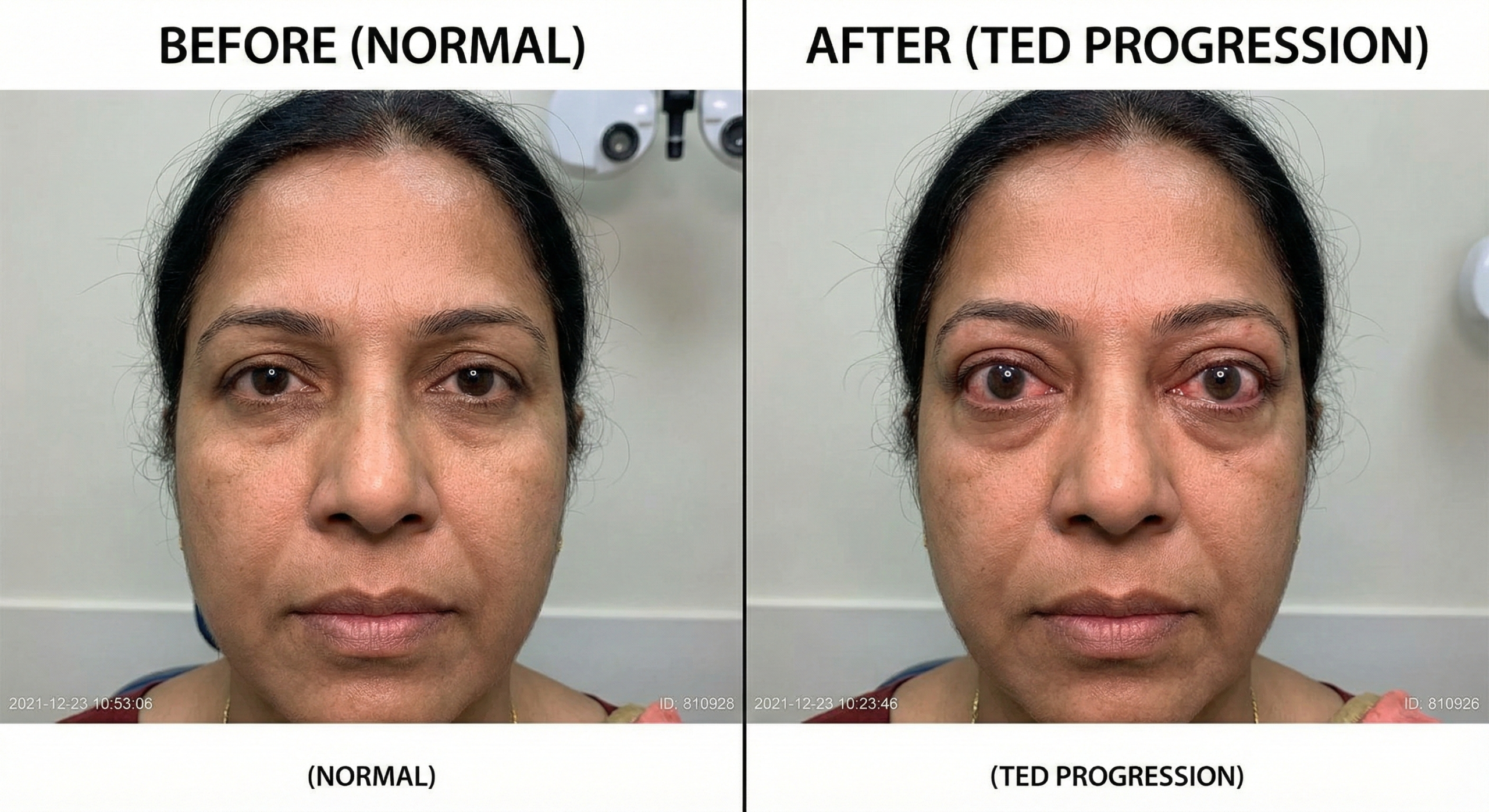
Thyroid Eye Disease occurs when the immune system mistakenly attacks tissues around the eyes. This leads to inflammation, swelling of eye muscles, and fat expansion inside the orbit (eye socket).
Swelling, redness, pain, and progressive changes.
Inflammation reduces, but structural changes may persist.
Assessment of vision, eye movement, and optic nerve.
Coordination with endocrinologist.
Steroids or immunomodulatory treatment during active phase.
For severe bulging or optic nerve compression.
Yes, untreated thyroid eye disease can lead to double vision or optic nerve damage.
Inflammation may subside, but some structural changes may require treatment.
Yes, eye symptoms can occur even if thyroid hormone levels are controlled.
If you notice bulging eyes, redness, double vision, or discomfort.
Thyroid-related eye changes are manageable with timely treatment. Early intervention prevents serious complications.